Zero to Content Engine in 48 Hours: A Step-by-Step Playbook

Zero to Content Engine in 48 Hours: A Step-by-Step Playbook
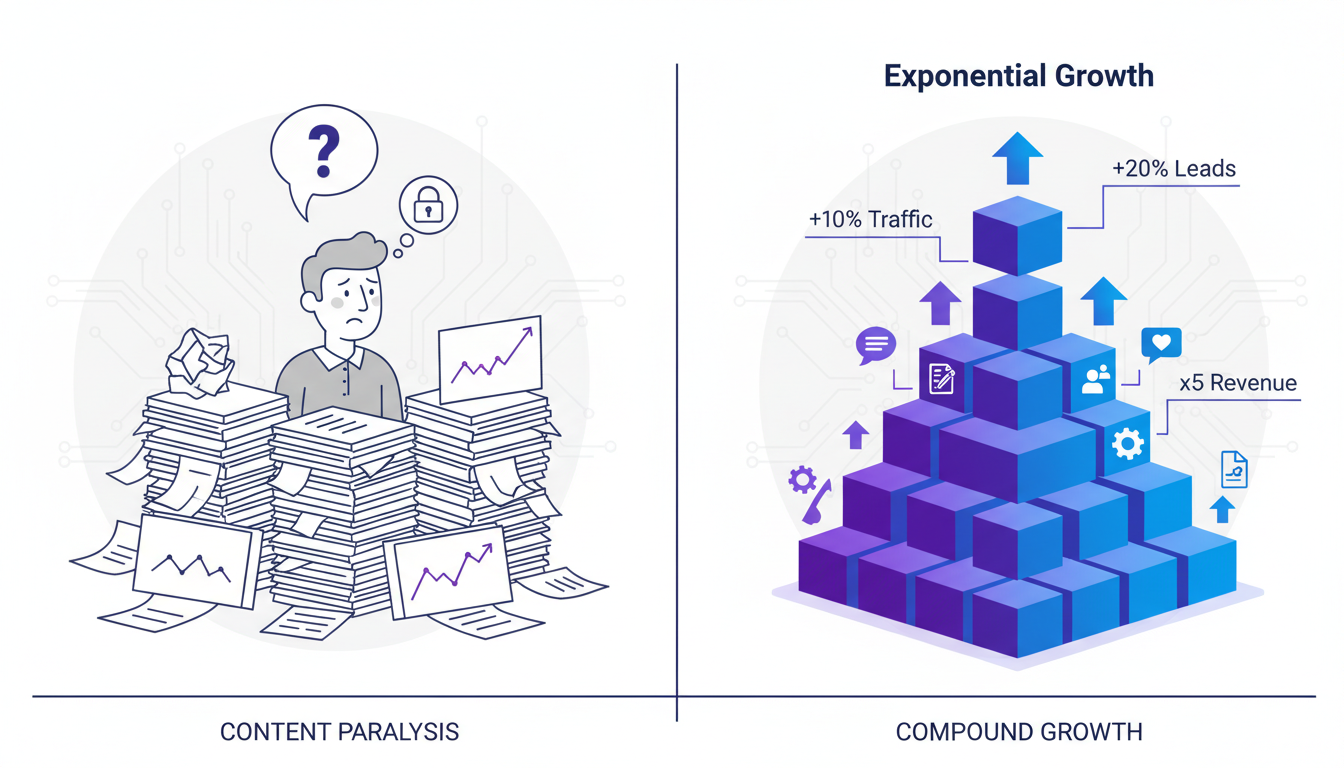
You know you need content marketing. You've been saying "I should start a blog" for months. Every competitor seems to be crushing it with consistent, engaging content while you're stuck spinning your wheels.
Sound familiar?
Here's the reality: 48% of marketers rely on content marketing automation, using software programs to initiate and complete time-consuming tasks without manual intervention after initial setup. The difference between businesses that scale through content and those that struggle isn't talent—it's having a systematic approach.
This playbook shows you how to build a complete content engine from scratch in just 48 hours. By Sunday night, you'll have an automated system generating, scheduling, and publishing content that sounds like you wrote it personally.
Hour 0-4: Foundation Setup
Choose Your Content Automation Platform
Start small and expand strategically: begin by automating one high-volume process like blog production, measure success through efficiency and impact metrics, then gradually expand to other content types.
For most founders, this means selecting a platform that handles:
- AI content generation
- Voice calibration (making AI sound like you)
- Publishing automation
- Performance tracking
Popular options include integrated platforms like Supramono, which combines all these functions, or a combination of tools like ChatGPT Plus for generation, Buffer for scheduling, and Google Analytics for tracking.
Complete Platform Onboarding
Many agencies reduce onboarding time from 10+ days to under 48 hours by following structured processes. Here's your checklist:
- Account Setup (30 minutes)
- Create your account
- Connect social media profiles
- Link your website or CMS
-
Set up billing and credit allocation
-
Initial Configuration (90 minutes)
- Define your target audience
- Set content categories (thought leadership, how-to guides, industry insights)
- Choose publishing frequency
- Configure basic workflow stages
Hour 4-8: Voice Calibration Mastery
Upload Your Writing Samples
Voice calibration is what transforms generic AI output into content that sounds authentically like you. AI systems can embed your brand's specific rules, style guides, and knowledge directly into the content creation process, ensuring the AI generates content that is not only on-brand but also factually accurate and up-to-date.
Best practices for voice calibration:
Gather 3-5 High-Quality Samples:
- Blog posts you're proud of
- Email newsletters with good engagement
- LinkedIn posts that performed well
- Speaking transcripts or podcast appearances
Common Voice Calibration Mistakes to Avoid:
- Using too few samples - The AI needs sufficient data to understand your patterns
- Mixing different contexts - Don't combine formal presentations with casual social media posts
- Including heavily edited content - Use pieces that reflect your natural writing voice
- Skipping the refinement process - Voice calibration improves with feedback
Refine Through Testing
Generate 2-3 test pieces using your calibrated voice. Compare them side-by-side with your original writing. Look for:
- Sentence structure patterns
- Vocabulary choices
- Tone consistency
- Technical depth appropriate to your expertise
Rate each output and provide feedback. AI systems can upload style guides, product information, and customer personas, and use this custom knowledge to ground all outputs.
Hour 8-16: Content Calendar Architecture
Map Your Content Workflow
Start by documenting your entire content journey from the moment someone suggests an idea to the moment it goes live. Write down every single step: who creates the initial draft, who reviews it, how many approval rounds it goes through, where it gets scheduled, how it gets published, and what happens after it's live.
A typical automated workflow includes:
- Ideation - AI suggests topics based on trends and keyword research
- Creation - AI generates first draft using your calibrated voice
- Review - You approve or request changes
- Scheduling - Content automatically queues for optimal posting times
- Publishing - Automatic distribution across chosen channels
- Tracking - Performance metrics flow back into the system
Set Up Approval Workflows
Add approval gates at transition points in your workflow. For example, require content manager sign-off before a task moves from Editing to Scheduling. Approvals create a formal record of who reviewed what and when.
For solo founders:
- Set up email notifications for new drafts
- Create a simple approve/reject/revise system
- Build in 24-48 hour buffer time for review
For teams:
- Assign specific reviewers by content type
- Create role-based permissions
- Set up escalation paths for urgent content
Configure Automation Rules
Automate repetitive handoffs: auto-assign subtasks when a task moves to a new section, notify the editor when a draft enters Editing, or flag tasks that have been in one section for more than 5 business days.
Essential automation rules:
- Content generation triggers - New posts created based on editorial calendar
- Review notifications - Automatic alerts when content needs approval
- Publishing schedules - Content goes live at predetermined times
- Performance tracking - Metrics automatically collected and reported
Hour 16-24: First Week Optimization Setup
Batch Content Creation
Set aside time each week or month for content creation. Maybe it's 2 hours every Monday. Group similar tasks: Do all your planning, then all your writing, then all your design work.
Your first optimization session should focus on:
Week 1 Priorities:
- Generate 4-6 pieces of cornerstone content
- Test different content formats (how-to guides, thought leadership, case studies)
- Establish baseline performance metrics
- Refine voice calibration based on initial outputs
Optimization Checklist:
- Content Quality Review
- Does it sound like you?
- Is the information accurate?
-
Would you be comfortable sharing this publicly?
-
SEO Optimization
- Target keywords naturally integrated
- Proper heading structure
- Meta descriptions optimized
-
Internal linking opportunities identified
-
Distribution Timing
- Posts scheduled for optimal audience engagement
- Cross-platform adaptation (LinkedIn vs. Twitter formatting)
- Follow-up engagement strategy defined
Performance Monitoring Setup
Analytics flow back into the system. Engagement metrics, reach data, and conversion tracking inform the next content cycle. The calendar adjusts based on what actually works.
Track these key metrics from day one:
- Engagement rates by content type
- Traffic generation from published pieces
- Time saved through automation
- Voice consistency scores from audience feedback
Hour 24-36: Advanced Workflow Integration
Connect Your Marketing Stack
The most effective systems connect these components through APIs or workflow automation tools like Zapier or Make, creating a seamless pipeline from idea to publication to analysis.
Integrations to prioritize:
- CRM connection - Content personalized based on customer data
- Email marketing - Blog posts automatically become newsletter content
- Social media - Cross-platform posting with platform-specific optimization
- Analytics tools - Performance data feeds back into content planning
Scale Your Content Types
Once your basic system works, expand systematically:
Week 2-3 Additions:
- Social media post automation
- Email newsletter templates
- Video script generation
- Repurposing workflows (blog post → social series → newsletter section)
Week 4+ Advanced Features:
- Industry trend monitoring
- Competitor content analysis
- A/B testing automation
- Lead magnet creation
Hour 36-48: Quality Assurance and Launch
Final System Testing
Before going live, test your entire workflow:
- End-to-End Test Run
- Trigger content creation
- Review approval process
- Verify publishing automation
-
Confirm analytics tracking
-
Quality Gates Verification
- Voice consistency check
- Factual accuracy review
- Brand alignment confirmation
- SEO optimization validation
Launch Strategy
Human oversight remains critical. Before content publishes, approval workflows route posts to designated reviewers. Email-based approvals send formatted previews showing exactly how content will appear on each platform.
Your first week should include:
- 2-3 foundational blog posts
- Daily social media updates
- One email newsletter
- Cross-promotion across all channels
Week One Success Metrics
Most users report saving 10-15 hours per week on content-related tasks. Ideation and first drafts that took 2-3 hours now take 20-30 minutes. Scheduling and optimization become automated rather than manual processes.
By the end of your first week, you should see:
- Time savings: 10+ hours reclaimed weekly
- Content consistency: Daily publishing without manual intervention
- Quality maintenance: Content that sounds authentically like your voice
- Engagement growth: Increased interaction rates from consistent posting
Common Pitfalls and How to Avoid Them
Over-Automation Too Quickly
Start with one workflow and prove it works before scaling. A common mistake is trying to implement all campaigns simultaneously. The best approach is to start small.
Neglecting Voice Calibration
Generic AI content stands out—and not in a good way. Invest time upfront in voice calibration for authentic-sounding content.
Skipping Performance Review
Your automated content calendar is a living system. Review it quarterly to identify new automation opportunities, remove workflows that aren't delivering value.
Missing Human Touch Points
Remember: Automation enhances human touch, not replaces it. Your expertise, insights, and personality are what make content valuable.
Your Content Engine Awaits
In 48 hours, you've built something that traditionally takes agencies months to set up: a complete content engine that runs itself while maintaining your authentic voice.
Companies using AI marketing automation see an average of $5.44 in revenue for every $1.00 spent—a 544% return over three years. Additionally, 76% of companies generate positive ROI within the first year.
Your content engine is now generating ideas, creating drafts, scheduling posts, and tracking performance—all while you focus on building your business.
Ready to transform your content marketing from a time-consuming chore into an automated growth engine? Get started with Supramono and see how AI agents can build your content pipeline while you sleep.

Supramono
24 AI agents that build your pipeline
24 AI agents that build your pipeline
Learn more about Supramono and get started today.
Visit Supramono